Gardiens de la Galaxie : critique du western spaghetti spatial de Marvel (et c’est très bien)
Sommaire
Aventure intergalactique aux accents de renouveau
Embark with us on an exhilarating journey through the cosmos as we explore the latest installment of the Guardians of the Galaxy saga. Renowned for reshaping the dynamics of Marvel’s celestial defenders, the trilogy directed by James Gunn has captivated audiences, taking the previously conscripted soldiers led by Star-Lord through a metamorphosis into a band of misfit heroes. Now, in the wake of these cinematic blockbusters, a fresh comic series crafted by Jackson Lanzing, Collin Kelly, and Kev Walker seeks to chart its own path. Will it succeed in casting off the shadow of its movie universe counterparts?
The evolution of the Guardians has been intriguing to witness, with their comic book counterparts gradually diverging from the Marvel Cinematic Universe’s portrayal. After the impact of the films, the series by Al Ewing, Juan Frigeri, Marcio Takara, and Juann Cabal aimed to add layers to Star-Lord, imbuing him with a newfound gravitas as a demi-god bathed in solar energy.
Echoing the resounding footsteps of these interstellar renegades, Jackson Lanzing, Collin Kelly – concurrently helming the narrative threads of Thunderbolts and Captain America: Sentinel of Liberty – align with artist Kev Walker to present a revised depiction of the space-faring heroes, while reverently acknowledging their rise to fame.
The stoic crusade of a fractured fellowship
Gone are the days of the rag-tag family held together by tough love. The opening chapters of this new era greet us with a dramatically altered crew, marked by solemn faces and a history of unseen turmoil. The aftermath of these off-panel events has left deep scars on our starry-eyed vigilantes, so much so that even the once jovial Groot has morphed into a towering harbinger of doom. Laughter has vacated its seat at the table of this motley assembly.
An odyssey draped in the garments of desolation
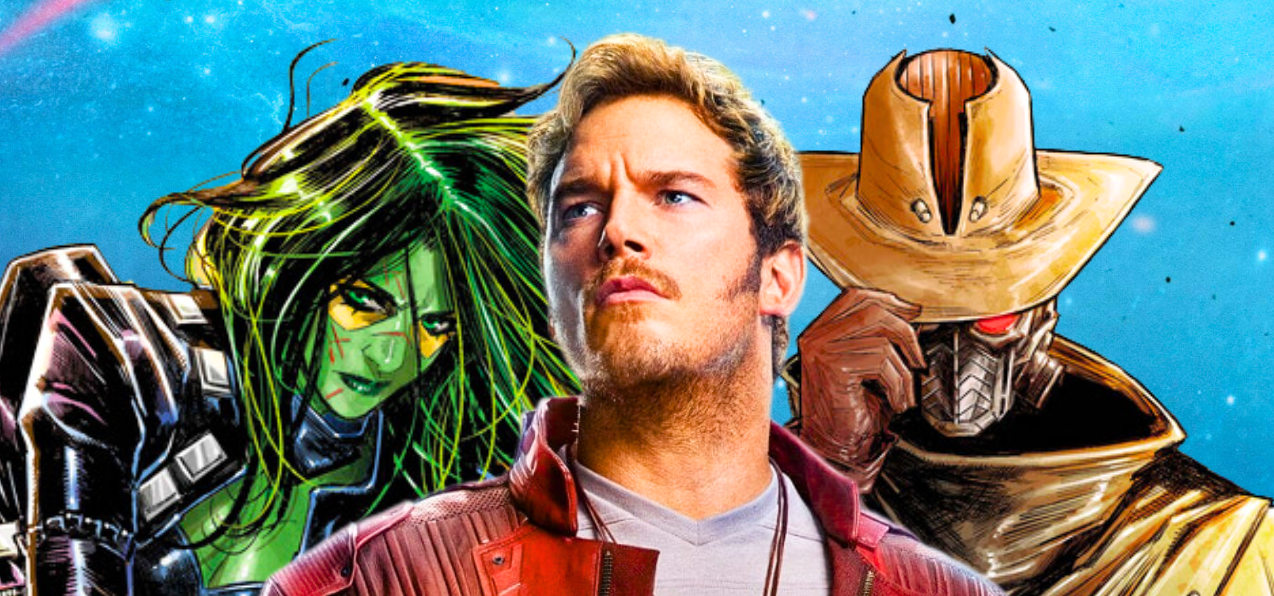
Against the backdrop of an apocalypse-tinted narrative and strained bonds, Guardians of the Galaxy finds its setting amidst sprawling deserts, where isolated and unfortified villages slowly succumb to both rust and sand. Kev Walker’s meticulously detailed artistry recasts the outfits of Star-Lord, Gamora, Mantis, and Rocket Raccoon in a Clint Eastwood-esque stylistic makeover, transforming them into celestial cowboys and saloon dancers brandishing laser sidearms. This fusion of space opera and spaghetti western reinvents the iconography of the Guardians and distancing them from Marvel’s overarching cosmic superhero vibe.
As we immerse ourselves in this aesthetic blend reminiscent of age-old cinematic styles, we are reminded of the limitless possibilities that the universe of comics provides. By weaving in themes of desolation and camaraderie amidst the stars, the Guardians of the Galaxy are not just redefined; they are reborn, soaring on silver screens of paper into a frontier unbounded by the familiar. Welcome to a new chapter in Marvel’s otherworldly saga, where every turn of the page is a step into the unknown, and every panel is a love letter to the enduring spirit of adventure that fuels our collective quest for stories among the stars.
Star-Lord, le nouvel anti-héros du Wild West Cosmique
Aux confins de la bande dessinée et du western spaghetti, le dernier opus de « Gardiens de la Galaxie » redessine les contours d’une épopée spatiale avec un style empreint de l’aura des cinémas de Sergio Leone. La parure visuelle de cette série aux allures de Far West interstellaire captive dès les premières pages, faisant ressortir la tension à travers un jeu de cadrages astucieux. Des gros plans qui captent des regards intenses aux panoramas élargis où s’étendent les déserts cosmiques, ce tome 1 s’affirme par des séquences graphiques habilement pensées pour maintenir l’essence du récit.
Un héritage du Far West dans l’espace
Ce n’est pas le Peter Quill léger et espiègle auquel nous pourrions être habitués, mais plutôt une version sombre et mystérieuse, presque arrachée à l’univers poussiéreux de « Django ». La bande dessinée fait écho à un héritage cinématographique précis, reprenant des instants de silence avant une fusillade et des ambiances saturées de tension. Le début de cet ouvrage nous initie à une aventure qui, tout en s’ancrant dans les archétypes du western classique, se lance aussi à la conquête de l’inconnu spatial, une frontière aussi vaste que libératrice.
Des héros face à leur solitude
Les scénaristes Jackson Lanzing et Collin Kelly font preuve d’une habileté certaine en incorporant au sein de leurs trames complexes des thèmes chers au cinéma du western. Ils dépeignent des Gardiens de la Galaxie marqués par le temps, épuisés de leurs innombrables aventures et confrontés à la lourde tâche de redéfinir leur rôle de héros. Nous sommes loin des collaborations super-héroïques; ici, les protagonistes évoluent seuls, en quête de leur propre définition de ce que signifie être un héros dans un univers écrasant d’immensité.
Un voyage épique interrompu
Toutefois, il convient de modérer notre enthousiasme face à ce début prometteur. Après cinq chapitres progressant en intensité, la narration nous laisse sur notre faim avec une fin aussi spectaculaire qu’inattendue. Ce premier volume pose plus de questions qu’il n’apporte de réponses, et bien que l’aventure débute avec audace et créativité, la suite devra démontrer la capacité des auteurs à maintenir le cap sur la distance.
L’oeuvre combine avec brio tradition et innovation, renouvelant l’image d’une équipe de héros qui a su se réinventer au fil du temps. Espérons que les prochains chapitres sauront valider ce début flamboyant, car si ce premier tome mérite salutation, l’avenir dira si le potentiel se concrétisera pleinement. Découvrez ce voyage spatial aux allures de western dans « Gardiens de la Galaxie 1 », disponible aux éditions Panini Comics France.